





Tired of Surface-Level Faith?
Join the community where your Christian life blooms with meaningful encounters with God.
Angela Meer has spoken and written for:


Living By Design Ministries



free resources

Testimonies
-
Testimony from california
“Wow wow wow on this podcast! I love it! I believe many chains will fall off as people listen and receive what is being taught in this podcast! I believe it will set many people free from the religious (Pharisee) spirit! Many will SOAR in their new identity!”

-
Testimony from oregon
The way you effortlessly weave scripture into (usually difficult) Jungian concepts and share with us the heart of God for our union with Him. The Scripture cements it all in! This podcast will take new territory for Christ!

Featured Podcasts and Blog Posts
Featured
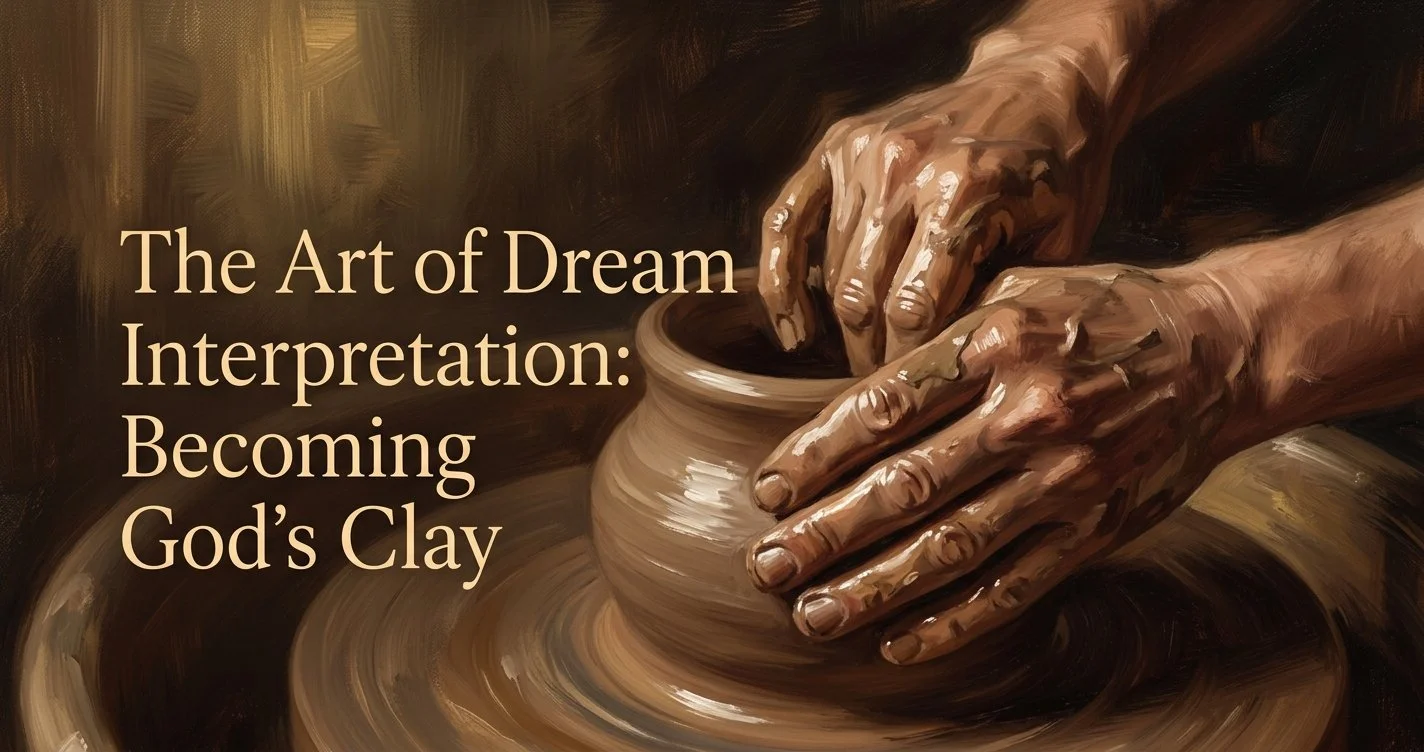
AI can already outsmart us on the Bible, on exegesis, on historical and archaeological findings, on nearly every methodology you could name. But there is one thing it cannot do, and it may be the thing that matters most. AI cannot dream. Today, in the final episode of the season, we talk about why that matters and what to do about it.
This is week ten of our ten-week series on the dreaming life, and it closes the arc somewhere I did not expect to land. About a year ago I was studying Carl Jung's mandalas when the Lord told me to stop writing my dreams down and start illustrating them instead. I was not thrilled. I share the objections I had, which are probably the same ones you have, and what I discovered underneath all of them: that writing a dream down is already translating it out of the language it arrived in, and translation always loses something.
We look at why God chooses symbols in Scripture, in parables, and in dreams, precisely because symbols are not fixed and cannot be reduced to a single meaning. We look at Carl Jung, who worked in watercolor, oil, calligraphy, stone, and architecture, and who never considered himself an artist, only someone who needed art to understand his soul. We visit Bollingen, the tower on Lake Zurich where Jung started building a castle out of materials on the ground and found meaning surfacing in places he never expected. And we talk about why play matters for anyone trying to disconnect from the rational world long enough to hear God.
If you have been following this series, thank you for walking the whole ten weeks. Subscribe to The Christian Jung on Substack, and find full show notes at angelameer.com.
Heal Deeply. Walk Holy.
Show Notes
Scripture referenced: Romans 8 (sons and daughters), Acts 17:11 (the Bereans).
Key terms: Mandala (a circular symbolic form Jung drew daily as a way of recording the state of the soul). Translation loss (the essence that drops away when a dream is converted out of symbol into words). Bollingen (the tower Jung built on Lake Zurich, where play and building became part of his working method).
Prayer: the Suscipe of St. Ignatius of Loyola, from the close of the Spiritual Exercises.
Heal Deeply. Walk Holy.
Keywords
dreams and art Christian, illustrated dream journal, Carl Jung mandala practice, AI cannot dream, Christian creativity podcast, dream journaling methods, Jung Bollingen, art and spiritual formation, symbols language of God, Christian art and faith, depth psychology and faith, Return to Awe course, dreaming as devotion
Tags
Christianity, Jungian psychology, dreams, art, creativity, Christian podcast, theology, soul care
Internal Links (copy-paste ready)
Substack article: https://angelameer007.substack.com/p/b08202e3-8386-4c96-a918-3ad4bc8042c2
Website: https://www.AngelaMeer.com